How to read a cloth before you buy it
Weight, twist, hand and the light test. Four things our cutters check on every bolt, and how you can check them in a fitting room.
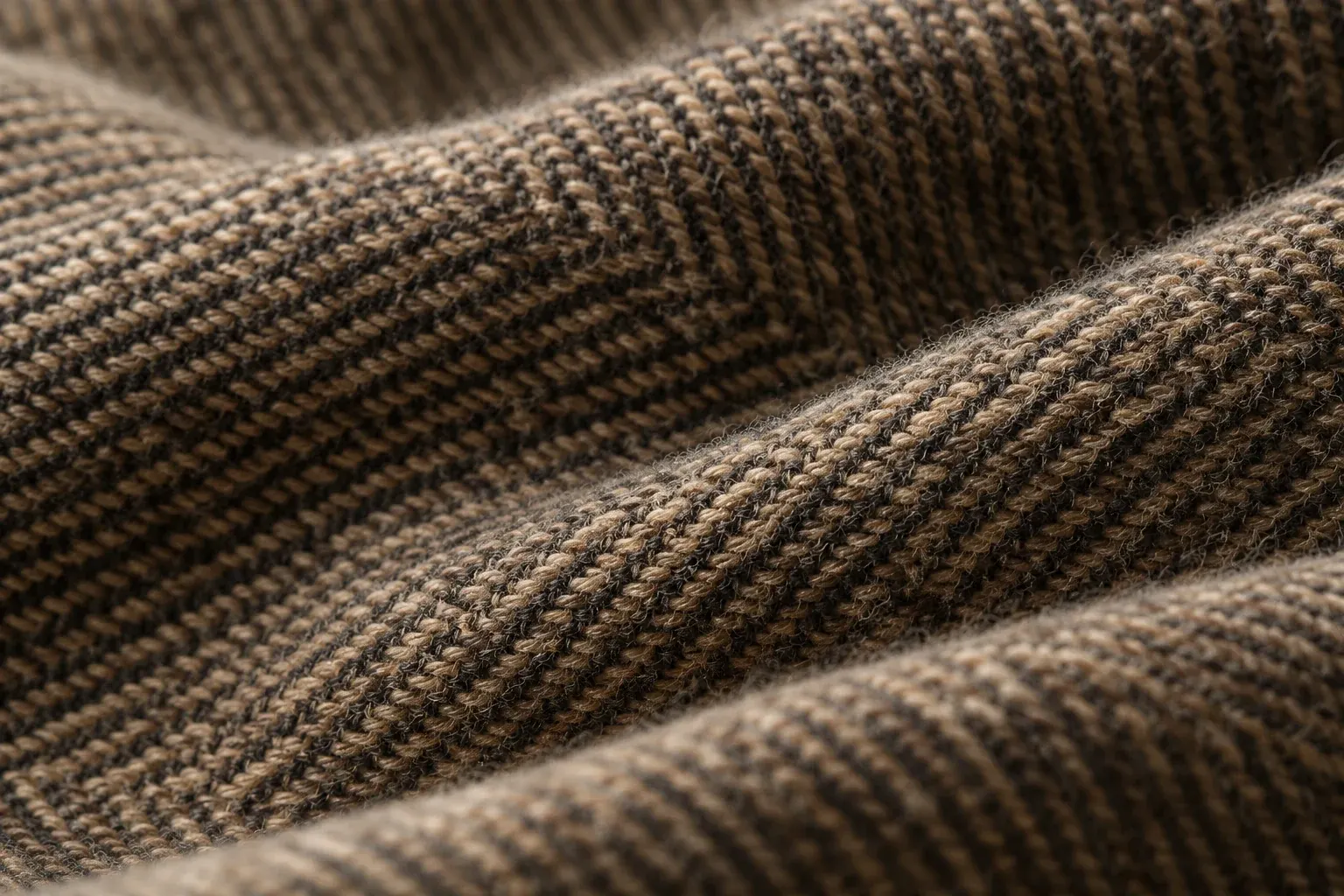
A label tells you what a cloth is made of. It does not tell you how it will wear. When a bolt arrives at the atelier, our cutters look at four things before a single pattern is laid on it.
Weight
We measure weight in grams per metre. A winter coating sits between 600 and 800; our Arden overcoat cloth is 720. Heavier is not always warmer, but a heavier cloth drapes, and drape is what makes a coat hang straight from the shoulder instead of following the body.
Twist
Hold a thread up and look at it. A tighter twist gives a drier, cooler hand and resists pilling; a looser twist is softer and warmer, and asks for more care. Our flannel uses a gentle twist on purpose: it should feel like a blanket, not a suit.
Hand
Close your fist around the cloth for five seconds, then open it. A good wool recovers almost at once. Creases that stay are a sign of short fibres or a finish that will wash out.
The light test
Hold the cloth up to a window. You should see an even veil, without thin patches or slubs, unless the slubs are the point. Even weaving is the first sign of a cloth that will age evenly.
In the boutiques we keep swatches of every cloth we use. Ask for them at your fitting.